


The beauty of living room décor is its versatility. There’s no single “perfect” layout because the right arrangement depends on your space, your lifestyle, and your personal style. Instead, focus on three key principles: proportion, form, and functionality.
Whether you’re working with a spacious open-plan room or a smaller, cosier lounge, these six living room layout ideas will help you create a space that feels comfortable, welcoming, and easy to live in.
For Julia Bilotta, Creative Stylist at Sofology, the starting point is understanding how you want to use your room rather than following rigid design rules. “The best living room layout is one that encourages connection, provides comfort, and makes everyday moments feel a little more special.”
1. Build Your Layout Around a Focal Point
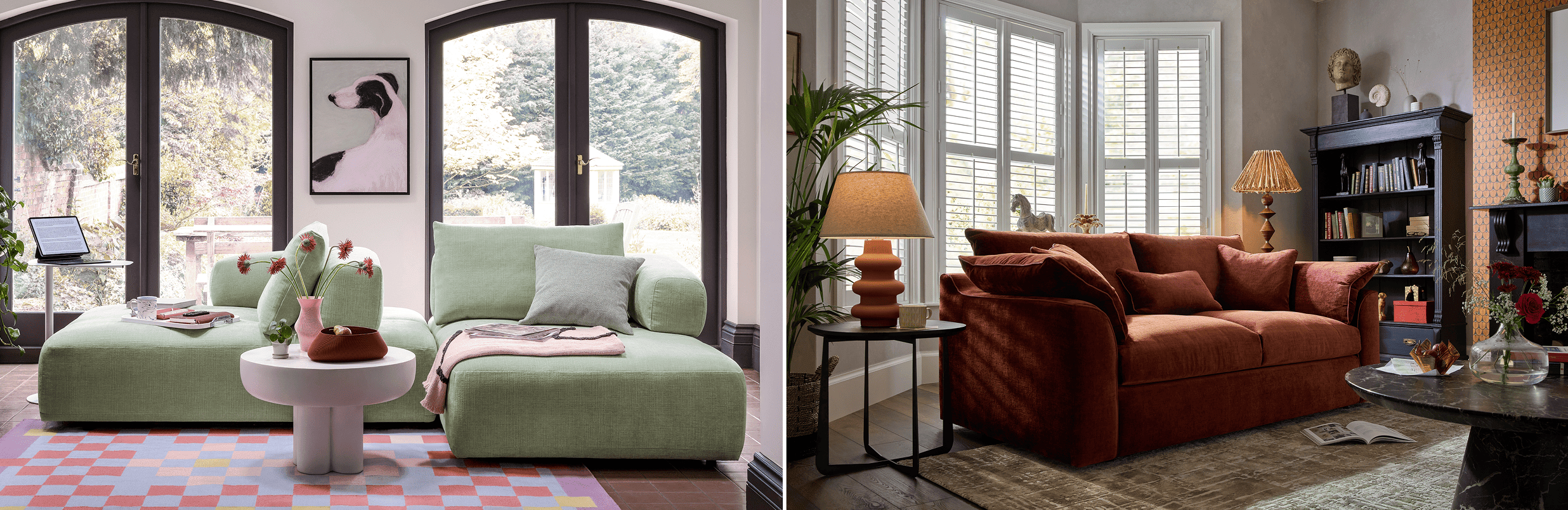
Every successful living room design benefits from a focal point — a feature that naturally draws attention and gives the room a sense of direction. This could be a fireplace, a large window, a striking piece of artwork, or your television.
Once you’ve identified the focal point, arrange your furniture around it. This creates a natural foundation for your living room layout.
Position your main seating, such as a fabric sofa, so it faces the focal point. If you’re working around a fireplace, arranging seating towards it can create a classic, cosy gathering space. If the television is the main feature, position your sofa at a comfortable viewing distance.
Giving your furniture a clear orientation helps the whole room feel more cohesive and considered.
2. Create a Sociable Conversation Zone
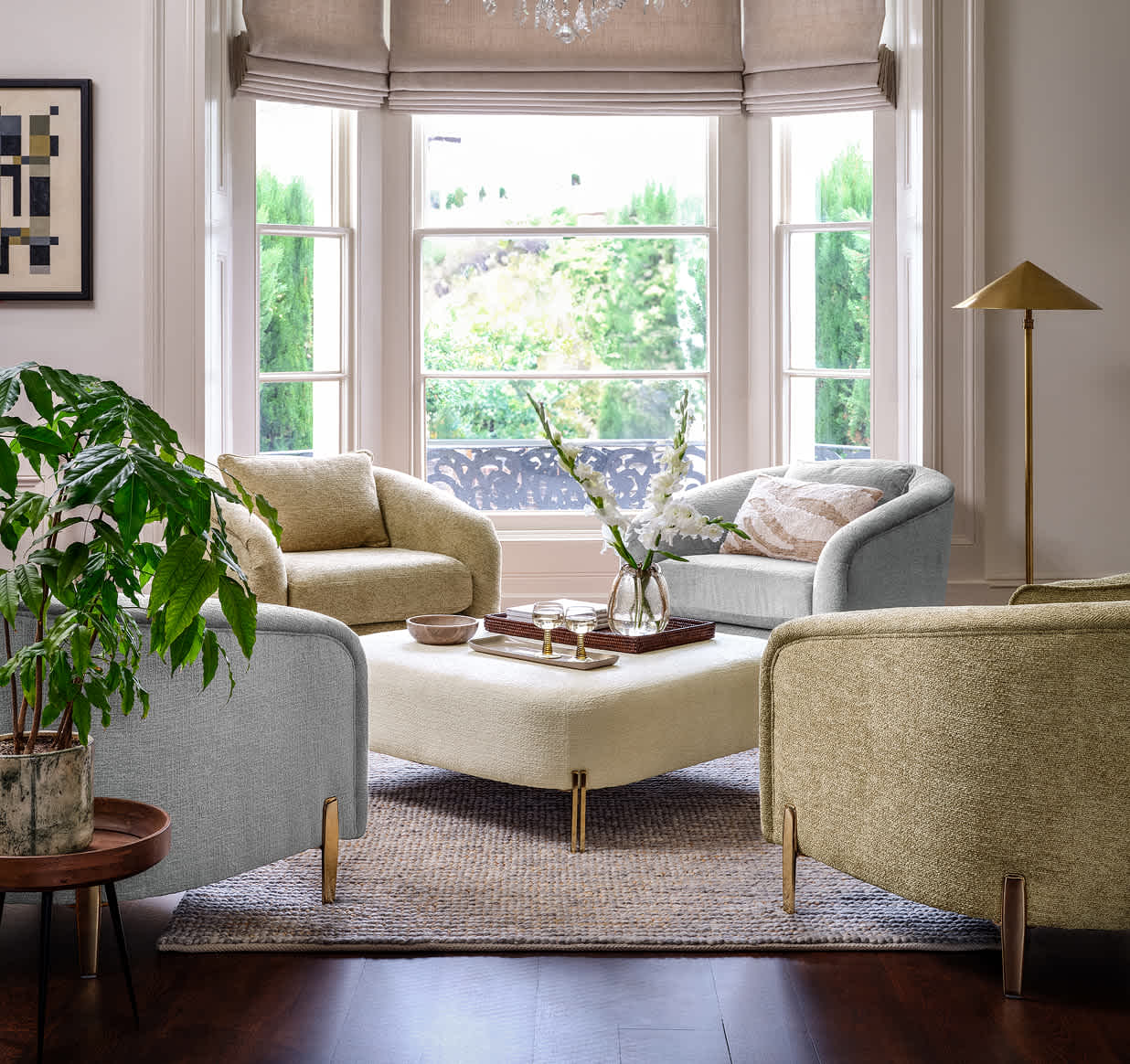
If you want your living room to feel welcoming and social, consider creating a dedicated conversation area. This arrangement brings seating closer together, making it easier for everyone to interact.
Rather than pushing furniture into opposite corners, group your seating together to create a more intimate and comfortable setting.
Try placing two sofas opposite one another, or pair a sofa with two armchairs. If you regularly entertain larger groups, a corner sofa can also help establish a natural conversation zone.
The trick is to find the right balance: seating should be close enough for easy conversation while leaving sufficient room to move around. As a general guide, leave enough central space for a coffee table without making the gap so large that conversation feels awkward.
“A conversation zone turns a living room into a social hub. By arranging seating to face inward, you’re quite literally inviting connection. It’s a simple shift that makes the room feel warmer and far more intimate, whether you’re hosting guests or just spending time with family.”
Medina Adam, Buyer at Sofology
3. Prioritise Flow and Clear Walkways
A beautiful living room also needs to be practical. When planning your furniture arrangement, think about how you naturally move through the space, particularly between doorways and other frequently used areas.
One of the most common layout mistakes is prioritising appearance at the expense of everyday functionality. A room can look great but quickly become frustrating if furniture blocks your route through it.
Try to maintain clear walkways of around two to three feet along the main traffic routes. Avoid positioning furniture directly in front of doorways or creating narrow bottlenecks around sofas, coffee tables, and other key pieces.
Good flow makes a living room easier to navigate — and much more relaxing to spend time in.
4. Try a Floating Furniture Layout
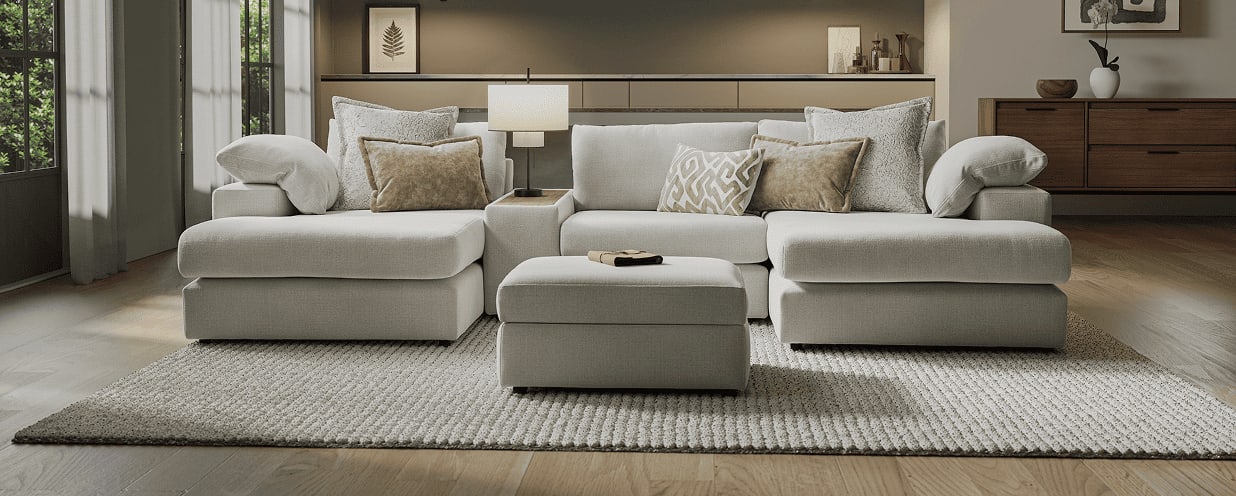
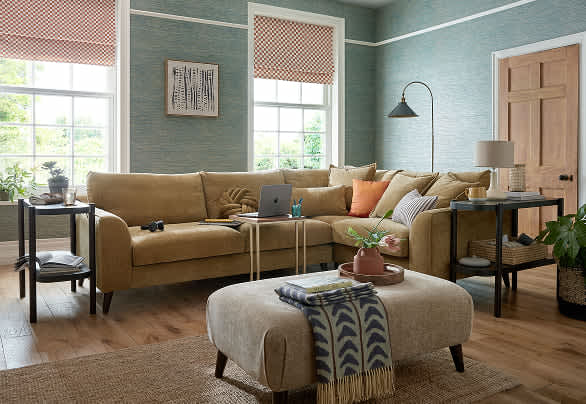
If you have a large living room, moving your furniture away from the walls can completely transform how the space feels.
A floating layout involves grouping furniture towards the centre of the room to create a defined, island-like seating area. This approach works particularly well in long or rectangular rooms, where placing everything against the walls can make the space feel more like a corridor.
“Floating your furniture is a transformative technique. It creates cosiness, even within a larger space, and allows you to establish zones with clear purpose. We love this layout in long or rectangular rooms for making the furniture feel much more connected and less irregularly scattered.”
Medina Adam, Buyer at Sofology
5. Use Rugs to Define and Connect the Space
Rugs are an easy way to anchor a furniture arrangement, visually connect different pieces, and create distinct zones within a larger living room.
For a balanced look, choose a rug large enough for at least the front feet of your main seating pieces to sit on it. This helps the furniture feel connected rather than scattered around the room.
Rugs are also wonderfully flexible. Because they can be moved or replaced relatively easily, they offer a simple way to refresh your living room layout whenever you want a change.
They can also bring your décor together. In a neutral lounge, a textured rug can introduce warmth and depth, preventing the room from feeling flat. In a multifunctional space, you can use different rugs to visually separate areas, such as a main seating zone and a compact dining area.
6. Balance Furniture Scale With the Room
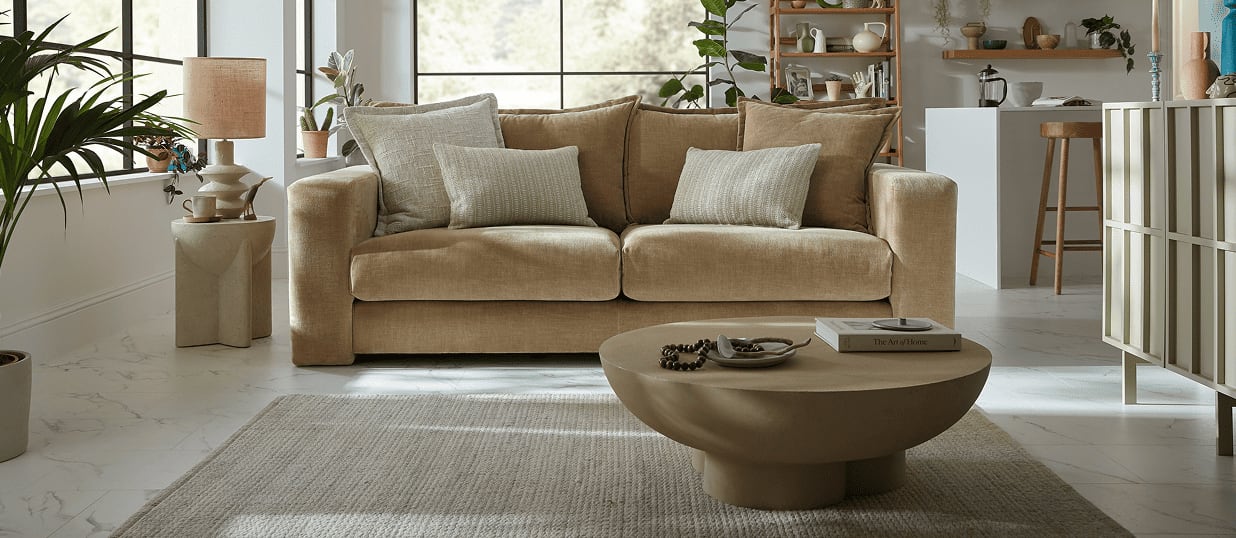
The most successful living room layouts balance the size of the furniture with both the room itself and the pieces around it. An oversized sofa can dominate a small lounge, while smaller, delicate furniture may look lost in a large room.
Before purchasing new furniture, measure both your room and the pieces you’re considering. Remember to think about visual weight as well as physical dimensions.
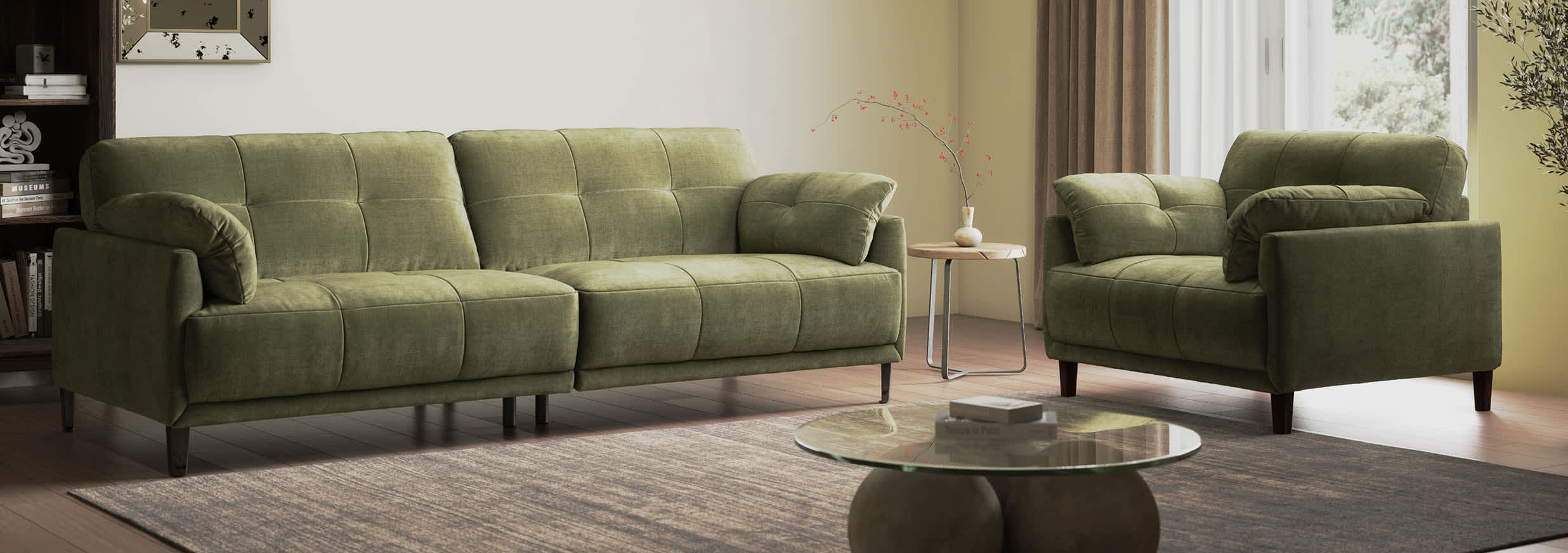
For example, a sofa with slim, raised legs, such as our Illinois sofa, can create a lighter, airier appearance than a design with a solid base that reaches all the way to the floor.
“Scale is all about the relationship between your furniture, your accessories, and the room itself. When the scale is right, the room feels harmonious and settled. Nothing jars or feels out of place, allowing the whole design to come together seamlessly. A practical tip is to balance your sofa with appropriately sized side tables and lighting. For example, a large sofa should be paired with taller floor or table lamps, rather than small accent pieces.”
Julia Bilotta, Creative Stylist at Sofology
Find the Right Centrepiece for Your Living Room
The right furniture arrangement can transform how your living room looks and feels. By considering your focal point, creating space for conversation, maintaining clear pathways, and balancing furniture scale, you can create a layout that works beautifully for your home and the way you live.
Ready to find the perfect anchor piece for your new layout? Explore our sofa collection to discover the ideal centrepiece, or visit the blog for more living room inspiration.


