


How to Care for Your Fabric Sofa: A Simple Gui0de to Keeping It Fresh
There’s nothing quite like a brand-new fabric sofa. It instantly makes your living space feel more comfortable, stylish and inviting — and naturally, you want it to stay looking that way for as long as possible.
The good news is that caring for a fabric sofa doesn’t have to be difficult. With a little regular maintenance and the right approach to spills and stains, you can keep your sofa looking fresh, clean and comfortable for years to come.
Here’s our guide to everyday fabric sofa care, from quick daily habits to dealing with those unexpected spills.
Everyday Fabric Sofa Care
Protect your sofa from sunlight
Where you position your sofa can make a bigger difference than you might think. If it sits close to a window, prolonged exposure to direct sunlight can gradually cause the fabric colour to fade.
Try to keep curtains or blinds closed during the brightest parts of the day. Alternatively, you can use a stylish throw to provide some extra protection when the sun is particularly strong.
If you have a light-coloured sofa, take extra care with throws and cushions. Make sure they’re made from colourfast materials to reduce the risk of colour transfer onto your upholstery.
It’s also worth being mindful of darker clothing, particularly denim. If you have a pale sofa, changing into lighter clothing or your comfiest loungewear before settling in can help keep the fabric looking its best.
Give your cushions a regular plump
Regularly plumping your cushions helps maintain their shape and keeps your sofa looking fuller and more inviting.
Whatever the filling, give each cushion a good plump and redistribute the filling so it’s spread as evenly as possible. Pay particular attention to moving filling from the back towards the front.
For fibre-filled cushions with removable covers, you can also gently separate compacted fibres by hand. This helps prevent them from clumping together and makes it easier to restore the cushion’s shape.
Keep the fabric looking smooth
Once you’ve plumped your cushions, take a moment to smooth the upholstery.
A simple technique is to work outwards from the centre of the cushion. First smooth horizontally and vertically, then work diagonally towards each corner. Finish by smoothing the fabric towards the edges and tucking it neatly around the sides and back.
Think of it as creating a neat, even pattern across the cushion — a little like the lines of the Union Jack.
And don’t forget to spread the love when it comes to seating. We all have a favourite spot on the sofa, but repeatedly using the same seat can lead to uneven wear. Switching seats from time to time helps distribute everyday use more evenly across the sofa.
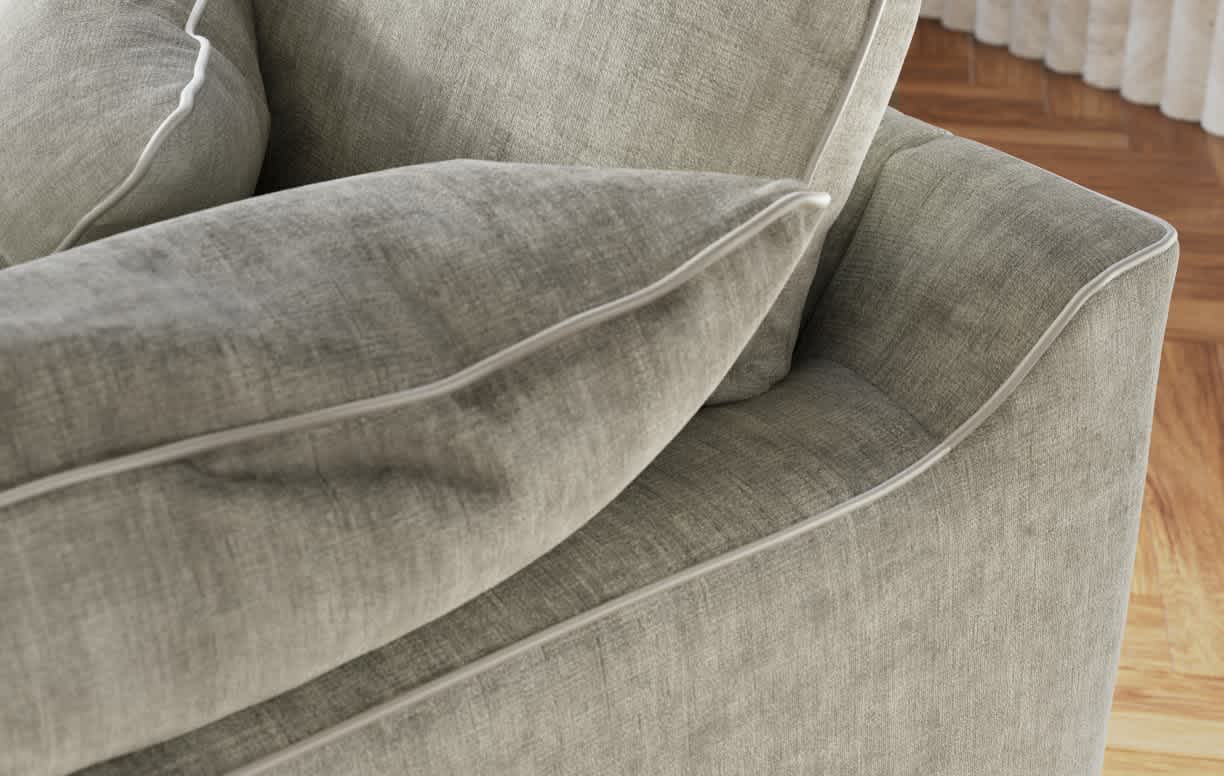
Weekly Sofa Maintenance
A quick weekly clean can go a long way towards keeping your fabric sofa fresh.
Aim to give the sofa a thorough plump and vacuum at least once a week. Vacuuming helps remove dust, crumbs, pet hair and other debris before they become embedded in the fabric.
If your seat cushions can be removed, take them off before vacuuming. This allows you to clean underneath them too, where dust and dirt can easily collect.
Refresh Your Sofa Every Six Months
With regular plumping and vacuuming, your sofa shouldn’t need a deep clean very often. As a general guide, consider giving it a more thorough refresh around every six months, or whenever it needs some extra attention.
Before using any cleaning product, always check your sofa’s care instructions and make sure the product is suitable for the particular fabric. Using the wrong cleaner could potentially damage the upholstery or affect its colour.
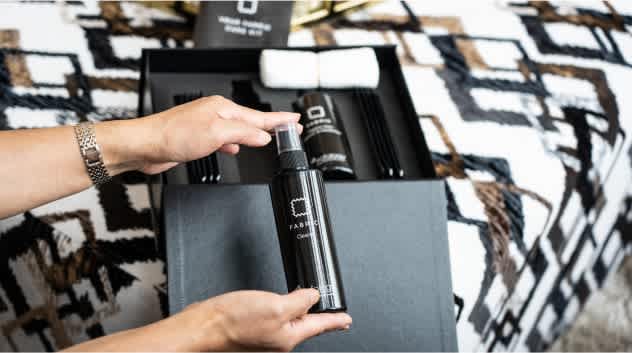
A fabric-specific sofa care kit can be a useful option, particularly if you want products designed to deal with everyday marks and common upholstery stains.
What to Do When You Spill Something
Accidents happen — especially when your sofa is the favourite place for movie nights, snacks and relaxing.
If something spills, act quickly. The sooner you deal with the liquid, the better your chances of preventing a stubborn stain.
Follow these steps:
1. Blot the spill immediately
Use a clean, dry, colourfast cloth to gently blot up as much of the liquid as possible. Avoid rubbing, as this can push the spill deeper into the fabric.
2. Continue with a damp cloth
Once you’ve removed the excess liquid, lightly dampen a clean, colourfast cloth and continue blotting the affected area.
Remember: blot rather than scrub. Rubbing can spread the stain and may damage the fabric.
3. Use a suitable fabric cleaner
If your sofa’s care instructions allow it, apply an appropriate fabric upholstery cleaner to the affected area. Use a clean, dry cloth to gently dab the stain until it has been removed.
4. Finish by cleaning the area
Once the stain has disappeared, vacuum the area to pick up any remaining residue or particles. Then use a clean, damp cloth to gently wipe the entire section from seam to seam.
Cleaning the whole panel rather than just the immediate spot can help reduce the risk of visible water marks or differences in appearance.
I don’t have a care kit, how do I clean a stain?
How to Clean a Sofa Stain Without a Care Kit
Don’t have a specialist sofa care kit to hand? For some fabrics, a mild solution of warm water and soap can be used to gently blot a stain.
Always check your sofa’s care instructions first, as different upholstery fabrics can have different cleaning requirements. If the fabric is suitable, work gently and avoid soaking the upholstery.
Once the stain has been removed, wipe the affected panel with a fresh, damp, colourfast cloth. Working from seam to seam can help prevent obvious water marks from forming.
Keep Your Fabric Sofa Looking Its Best
Looking after your sofa is mostly about consistency. Protect it from strong sunlight, plump and smooth the cushions regularly, vacuum it every week and deal with spills as soon as they happen.
A few simple habits can make a big difference — helping your fabric sofa stay comfortable, clean and looking great for longer.


